Ondo Finance (ONDO): The Future of Real-World Asset Tokenization
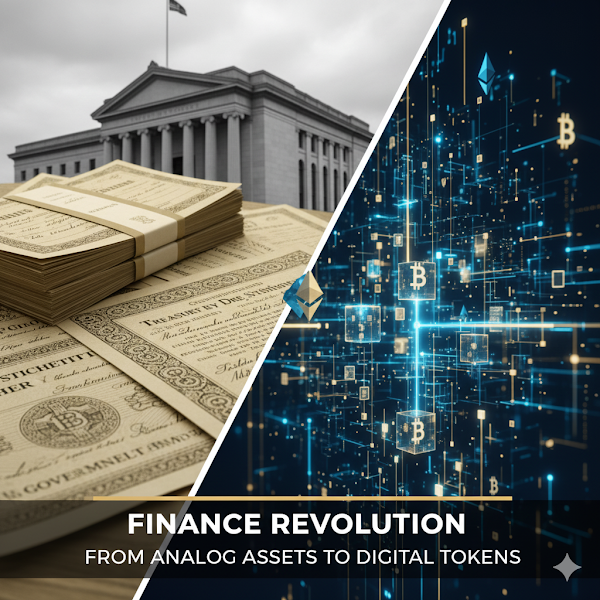
Ondo Finance (ONDO): The Future of Real-World Asset Tokenization
Explore Ondo Finance (ONDO) and real-world asset tokenization. Discover how blockchain technology is bringing traditional finance assets like bonds and treasuries on-chain.

Table of Contents
1. Ondo Finance: Bridging Traditional Finance and Blockchain
The convergence of traditional finance (TradFi) and decentralized finance (DeFi) represents one of blockchain technology’s most promising applications, yet this integration has proven remarkably challenging. While DeFi protocols demonstrated innovative financial mechanisms, they largely operated in isolation from the multi-trillion dollar traditional financial system containing bonds, treasuries, real estate, and other real-world assets (RWAs). Ondo Finance (ONDO) emerged as a pioneering platform specifically designed to tokenize institutional-grade financial products, bringing stable, yield-generating traditional assets onto blockchain infrastructure. This isn’t merely another DeFi protocol offering speculative yields from cryptocurrency trading—it’s a systematic effort to democratize access to traditionally exclusive investment products through blockchain technology.
Founded in 2021 by alumni from Goldman Sachs and other traditional finance institutions, Ondo Finance brings Wall Street expertise to blockchain innovation. The platform’s core proposition: institutional investors and qualified purchasers can access tokenized versions of U.S. Treasury bonds, money market funds, and other fixed-income securities, combining traditional finance’s stability with blockchain’s efficiency, transparency, and accessibility. For retail investors (in permitted jurisdictions), Ondo offers exposure to institutional-grade products previously requiring millions in minimum investments.
The real-world asset tokenization concept addresses fundamental limitations in both traditional finance and cryptocurrency markets. Traditional finance suffers from inefficiency (slow settlement, high intermediary costs, limited accessibility), while cryptocurrency markets suffer from volatility and disconnect from productive economic activity. Tokenizing real-world assets theoretically combines the best of both: productive assets generating real economic returns with blockchain’s efficiency and programmability.
What do you think about bringing traditional finance onto blockchain? Does tokenization truly democratize access, or does it simply create new forms of exclusivity and complexity?
1.1 Understanding Real-World Asset Tokenization
Real-world asset (RWA) tokenization involves representing ownership of traditional assets—government bonds, corporate debt, real estate, commodities, private credit—as tokens on blockchain networks. This process transforms illiquid, paper-based, or centrally-recorded assets into digital tokens that can be traded, transferred, and used in decentralized finance protocols while maintaining legal claims on underlying real-world assets.
The tokenization process involves several critical components:
- Legal structure: Establishing special purpose vehicles (SPVs) or trusts that legally own the underlying assets and issue tokens representing ownership claims
- Custody: Securing physical assets or securities with regulated custodians maintaining traditional finance protections
- Blockchain representation: Creating digital tokens on blockchain networks (typically Ethereum) representing fractional ownership or claims on underlying assets
- Compliance integration: Implementing KYC/AML procedures and restricting token transfers to qualified investors meeting regulatory requirements
- Oracle connections: Linking on-chain tokens to off-chain asset performance through price feeds and data oracles
- Redemption mechanisms: Enabling token holders to exchange tokens for underlying assets or cash equivalents
Ondo Finance’s OUSG (Ondo U.S. Government Securities) product exemplifies this structure. OUSG tokens represent shares in a fund holding short-term U.S. Treasury bonds—among the safest assets globally. Token holders receive yields from Treasury interest (currently 4-5% annually as of 2025), can verify holdings through on-chain transparency, and can redeem tokens for underlying value subject to compliance requirements.
The value proposition of RWA tokenization includes multiple benefits:
- Fractional ownership: Dividing expensive assets into smaller units making them accessible to broader investor base
- 24/7 trading: Blockchain operates continuously unlike traditional markets with fixed trading hours
- Programmable assets: Tokens can integrate with DeFi protocols for lending, collateral, and complex financial structures
- Transparency: On-chain records provide verifiable asset holdings and performance data
- Reduced intermediaries: Blockchain settlement eliminates some traditional financial intermediaries reducing costs
- Global accessibility: Blockchain enables cross-border investment subject to regulatory compliance
However, significant challenges and limitations constrain current RWA tokenization:
- Regulatory complexity: Securities laws require compliance varying by jurisdiction, limiting who can invest
- Legal uncertainties: Courts haven’t fully established how token ownership maps to traditional property rights
- Custody requirements: Real-world assets still require traditional custodians, limiting pure decentralization
- Redemption friction: Converting tokens back to real assets involves traditional financial system delays
- Limited liquidity: Current tokenized assets have modest trading volumes compared to traditional or DeFi markets
- Oracle dependencies: Connecting on-chain tokens to off-chain assets requires trusted data sources
Ondo’s approach prioritizes regulatory compliance over pure decentralization, recognizing that institutional adoption requires working within existing legal frameworks. This pragmatic strategy differs from crypto-native projects prioritizing censorship resistance and permissionless access. The trade-off: Ondo products are legally robust and attractive to institutions, but they sacrifice some of blockchain’s revolutionary potential by maintaining traditional gatekeeping.
1.2 Ondo Finance’s Product Suite and Technology
Ondo Finance operates through multiple product lines serving different market segments, from institutional investors to DeFi protocols seeking stable yield sources. Understanding these products reveals how Ondo translates tokenization concepts into actual offerings.
Institutional products include:
- OUSG (Ondo Short-Term US Government Treasuries): Tokenized fund holding short-term U.S. Treasury bonds, providing stable yield with minimal credit risk
- OMMF (Ondo Money Market Fund): Tokenized money market fund offering liquidity with competitive yields
- OHYG (Ondo High Yield Corporate Bonds): Higher-yield product investing in investment-grade corporate debt for qualified investors accepting more risk
- Custom structured products: Bespoke tokenization solutions for institutions seeking to bring specific assets on-chain
The OUSG product serves as Ondo’s flagship offering. Accredited investors can purchase OUSG tokens representing shares in the fund, which invests in U.S. Treasury bills and bonds with maturities under one year. Interest accrues continuously, with token value increasing to reflect accumulated yield (similar to traditional bond funds). Token holders can verify exact Treasury holdings through on-chain data, request redemptions subject to fund terms, and potentially use OUSG as collateral in DeFi protocols accepting RWA tokens.
For DeFi integration, Ondo has developed protocols enabling other DeFi platforms to incorporate tokenized real-world assets:
- Flux Finance: Lending protocol accepting OUSG and other RWA tokens as collateral
- Yield-bearing stablecoins: Exploration of stablecoins backed by tokenized Treasuries rather than pure cryptocurrency collateral
- Protocol partnerships: Integration with major DeFi protocols seeking stable yield sources uncorrelated with crypto markets
The technology architecture combines blockchain infrastructure with traditional finance connections:
- Ethereum-based tokens: Primary deployment on Ethereum for liquidity and DeFi compatibility
- Multi-chain expansion: Exploring deployment on other blockchains (Polygon, Solana) for lower costs and faster transactions
- Compliance rails: Built-in KYC/AML verification ensuring only qualified investors can hold tokens
- Smart contract automation: Automated interest distribution, redemption processing, and compliance checking
- Traditional custody integration: Connections to regulated custodians holding underlying securities
Ondo’s institutional focus distinguishes it from retail-oriented DeFi projects. The platform targets hedge funds, family offices, corporate treasuries, and other sophisticated investors seeking to allocate capital to blockchain-based products while maintaining regulatory compliance and institutional-grade security. This positioning creates different growth trajectory than consumer-focused crypto projects—slower initial adoption but potentially more sustainable as institutions gradually embrace tokenization.
The ONDO governance token serves multiple functions within the ecosystem: enabling holders to participate in protocol governance decisions, potentially receiving revenue sharing from platform fees, and aligning incentives between protocol development and token holders. However, ONDO token ownership differs from OUSG and other product tokens—ONDO is governance/utility token, while OUSG represents actual Treasury holdings.
Have you experienced investing in tokenized real-world assets versus traditional securities? Has this been helpful so far in understanding Ondo’s product structure?
2. Investment Analysis and Market Position
2.1 ONDO Token Economics and Value Proposition
The ONDO token serves as governance and utility token for the Ondo Finance ecosystem, creating investment thesis distinct from the tokenized assets (OUSG, etc.) that the platform offers. Understanding ONDO’s value proposition requires analyzing its role within the protocol, tokenomics structure, and potential appreciation drivers.
ONDO token functions include:
- Governance rights: Token holders vote on protocol parameters, product launches, treasury management, and strategic decisions
- Revenue potential: Possible fee-sharing mechanisms directing portion of platform revenues to token holders (subject to regulatory considerations)
- Ecosystem alignment: Creating incentive alignment between protocol success and token holder interests
- Network effects: As platform grows and processes more assets, ONDO potentially captures value from increased activity
- Staking mechanisms: Potential staking systems where ONDO holders secure network operations or participate in governance
The token distribution and emission schedule significantly impact supply dynamics. Initial allocations included distributions to team and early investors (with vesting schedules), community incentives and ecosystem development funds, strategic partners and advisors, and liquidity provisions for trading. As of 2025, substantial portions have vested, though some allocations continue unlocking—investors should monitor unlock schedules as they affect circulating supply and potential selling pressure.
From valuation perspective, several metrics matter for evaluating ONDO’s investment potential:
- Total value locked (TVL): Assets under management in Ondo’s products indicating platform adoption and usage
- Revenue generation: Fees collected from fund management, redemptions, and services
- Market capitalization: ONDO token’s total value relative to comparable RWA tokenization projects
- Token velocity: How frequently ONDO changes hands, indicating whether holders accumulate or trade actively
- Institutional partnerships: Enterprise clients and DeFi protocol integrations signaling growing ecosystem
The fundamental investment thesis for ONDO rests on several assumptions:
- RWA growth: Real-world asset tokenization represents multi-trillion dollar opportunity as traditional finance migrates on-chain
- Ondo leadership: Platform’s institutional focus and regulatory compliance position it as leader in emerging RWA sector
- Network effects: As more assets tokenize through Ondo, platform becomes more valuable and attracts additional users
- Regulatory clarity: Improving regulatory frameworks for digital assets enable broader institutional adoption
- DeFi integration: Tokenized RWAs become standard collateral and yield sources for DeFi protocols
However, alternative scenarios could limit ONDO’s upside:
- Competition intensifies: Other platforms (backed by larger financial institutions) could dominate RWA tokenization
- Regulatory challenges: Stricter regulations or adverse rulings could constrain business model
- Limited adoption: Institutions may prefer traditional finance infrastructure over blockchain-based alternatives
- Technology risks: Smart contract vulnerabilities or oracle failures could undermine confidence
- Economic conditions: Rising interest rates or market volatility could reduce demand for tokenized products
Comparing ONDO to competitors reveals distinct positioning: versus Centrifuge (decentralized RWA protocol), Ondo emphasizes institutional compliance over pure decentralization; versus Maple Finance (on-chain corporate lending), Ondo focuses on Treasuries and safer assets rather than private credit; versus traditional finance incumbents potentially offering tokenization, Ondo possesses blockchain-native advantages but lacks established client relationships and regulatory infrastructure of major banks.
Price performance has been volatile like most cryptocurrency assets, with ONDO experiencing significant appreciation during risk-on periods when investors seek exposure to DeFi innovation, and corrections during risk-off environments when capital flees speculative assets. The token’s correlation with broader crypto markets remains high, though RWA narrative during certain periods attracted attention independent of general crypto sentiment.
2.2 Risk Assessment and Competitive Landscape
Evaluating investment risks in ONDO requires examining technological, regulatory, competitive, and market factors that could significantly impact long-term value. Real-world asset tokenization combines complexities of traditional finance, blockchain technology, and evolving regulations—each presenting distinct risk categories.
Regulatory and legal risks:
- Securities classification: ONDO token’s regulatory status remains ambiguous—is it security, utility token, or something else?
- Jurisdictional restrictions: Regulations vary globally, limiting market access and creating compliance complexity
- Enforcement uncertainty: Regulators could challenge Ondo’s business model or specific products
- Legal framework evolution: Changing laws regarding digital assets could require business model adjustments
- Custody requirements: Regulations may impose additional custody obligations increasing operational costs
Technology and operational risks:
- Smart contract vulnerabilities: Bugs or exploits in Ondo’s contracts could result in fund losses
- Oracle dependencies: Reliable connection between on-chain tokens and off-chain assets requires trusted data sources
- Blockchain limitations: Ethereum congestion, high gas fees, or network issues could affect usability
- Redemption complexity: Converting tokens back to traditional assets involves multiple steps creating operational risks
- Scalability challenges: Platform must handle increasing volume as adoption grows
Market and competitive risks:
- Limited liquidity: ONDO and tokenized products may have thin markets creating price volatility
- Competition from incumbents: Major banks and financial institutions developing tokenization capabilities
- Competition from crypto natives: Other DeFi protocols offering alternative RWA tokenization approaches
- Product differentiation: Difficulty maintaining competitive advantages as market matures
- Customer acquisition: High costs of onboarding institutional clients with lengthy sales cycles
Economic and macro risks:
- Interest rate sensitivity: Rising rates affect Treasury yields and demand for fixed-income products
- Crypto market correlation: ONDO price remains tied to overall crypto sentiment despite RWA focus
- Institutional risk appetite: During market stress, institutions may reduce blockchain exposure
- Dollar strength: U.S. Treasury exposure creates currency considerations for international investors
- Credit events: Though Treasuries are safe, broader fixed-income market disruptions could affect sentiment
The competitive landscape has intensified significantly. When Ondo launched, RWA tokenization was niche with few serious competitors. By 2025, the space includes multiple categories of competitors: blockchain-native platforms like Centrifuge, Maple Finance, and Goldfinch offering decentralized RWA protocols; traditional finance entrants including BlackRock exploring tokenization (particularly after launching Bitcoin ETF), and other asset managers investigating blockchain integration; infrastructure providers like Securitize and Tokeny offering tokenization-as-a-service; and DeFi protocols like MakerDAO incorporating RWAs into their treasury management.
Ondo’s defensive moats include early-mover advantage in institutional RWA tokenization, regulatory compliance infrastructure already built, existing product suite with operating track record, institutional relationships and trust developed through traditional finance backgrounds, and technology platform optimized for compliant RWA tokenization. However, these moats face pressure from better-funded competitors and potential regulatory changes altering competitive dynamics.
The total addressable market for RWA tokenization remains speculative but potentially enormous. Traditional fixed-income markets exceed $100 trillion globally, real estate markets exceed $300 trillion, and private credit markets continue expanding. Even capturing tiny fraction of this activity through tokenization represents substantial opportunity. However, actual adoption depends on institutions genuinely preferring blockchain-based solutions over traditional infrastructure—an assumption that remains unproven at scale.
Please share your thoughts in the comments! Do you believe blockchain-based tokenization will genuinely transform traditional finance, or will it remain a niche application serving specific use cases?
3. Future Outlook and Strategic Considerations
3.1 The RWA Tokenization Trajectory
The future of real-world asset tokenization depends on multiple factors converging: regulatory clarity enabling broader participation, technological maturation providing security and scalability, institutional acceptance of blockchain-based assets, and demonstrated advantages over traditional finance infrastructure. Ondo Finance’s prospects are inseparable from this broader RWA tokenization trajectory.
Several scenarios could shape the space’s evolution:
Optimistic scenario (widespread adoption):
- Regulatory frameworks emerge globally providing clear legal status for tokenized assets
- Major financial institutions integrate tokenization into standard operations
- DeFi protocols extensively incorporate RWAs as collateral and yield sources
- Tokenized markets achieve significant liquidity comparable to traditional venues
- Cost savings and efficiency gains from blockchain become undeniable
- Ondo captures substantial market share as early mover with proven platform
Moderate scenario (gradual integration):
- Tokenization grows steadily but remains secondary to traditional finance
- Specific use cases (private markets, fractional ownership) achieve product-market fit
- Regulatory compliance creates barriers limiting pure decentralization vision
- Institutional adoption occurs slowly with conservative risk management
- Competition increases as more players enter space
- Ondo maintains position but faces margin pressure from competitors
Pessimistic scenario (limited adoption):
- Regulatory obstacles prevent mainstream institutional participation
- Traditional finance infrastructure modernizes without requiring blockchain
- Technology challenges (scalability, security) prove more difficult than anticipated
- Liquidity remains insufficient for serious institutional allocation
- Incumbents (banks, asset managers) dominate any tokenization that does occur
- Ondo struggles to achieve scale justifying valuations
The technological roadmap for RWA tokenization includes several critical developments:
- Layer-2 scaling: Moving tokenized assets to Ethereum layer-2s or alternative layer-1s for lower costs
- Cross-chain interoperability: Enabling tokenized assets to move between blockchains seamlessly
- Privacy enhancements: Zero-knowledge proofs protecting sensitive financial information while maintaining compliance
- Advanced smart contracts: More sophisticated automated financial logic in tokenized products
- Institutional infrastructure: Custody solutions, prime brokerage, and trading systems meeting institutional standards
Ondo’s specific strategic priorities likely include:
- Product expansion: Launching additional tokenized asset classes (real estate, private credit, alternative assets)
- Geographic expansion: Extending into additional jurisdictions as regulations permit
- DeFi integration: Deepening connections with major DeFi protocols using RWAs
- Enterprise solutions: Offering white-label tokenization services to institutions
- Liquidity development: Building deeper secondary markets for tokenized products
3.2 Investment Considerations and Strategic Positioning
For investors evaluating ONDO token as investment, several considerations warrant careful analysis beyond simple price speculation. RWA tokenization represents genuinely novel application of blockchain technology with legitimate use cases, but translating this promise into investment returns requires multiple conditions aligning favorably.
Investment time horizons matter significantly:
Short-term (1-2 years):
- ONDO price likely remains volatile, driven by crypto market sentiment and RWA narrative cycles
- Catalysts include major institutional partnerships, regulatory clarity, or significant TVL growth
- Risks include competitive pressure, regulatory setbacks, or crypto market downturn
- Suitable primarily for risk-tolerant investors comfortable with high volatility
Medium-term (3-5 years):
- RWA tokenization market should mature with clearer winners and losers emerging
- Ondo’s competitive position becomes more apparent as platforms demonstrate traction
- Revenue generation and business sustainability become more important than pure narrative
- Regulatory landscape clarifies, potentially creating tailwinds or headwinds
- Token valuation should increasingly reflect fundamental business performance
Long-term (5+ years):
- Tokenization either achieves mainstream adoption or remains niche application
- Winners consolidate market share with network effects creating defensibility
- Integration with traditional finance deepens or blockchain-based solutions prove unnecessary
- Business model evolution toward sustainable revenue generation
- Token value reflects actual economic value creation rather than speculation
Portfolio considerations for cryptocurrency investors:
- Correlation: ONDO correlates highly with crypto markets despite RWA focus, limiting diversification benefits
- Volatility: Expect significant price swings typical of smaller-cap crypto assets
- Liquidity: Lower trading volumes than major cryptocurrencies can create slippage
- Allocation sizing: Most advisors suggest limiting cryptocurrency exposure to small portfolio percentage, with ONDO representing subset
- Risk-adjusted returns: Evaluate whether ONDO’s risk/return profile justifies allocation versus alternatives
Compared to alternatives, ONDO occupies interesting positioning: versus pure DeFi governance tokens, ONDO benefits from real-world revenue potential from tokenized asset management; versus established cryptocurrencies (Bitcoin, Ethereum), ONDO offers higher potential growth but substantially higher risk; versus traditional finance investments, ONDO provides crypto exposure and speculative upside but with frontier market uncertainties; versus other RWA tokens, ONDO’s institutional focus and U.S. Treasury emphasis differentiate from private credit or real estate tokenization competitors.
The fundamental question for ONDO investors: will blockchain-based tokenization capture sufficient value from traditional finance to justify current valuations and provide attractive returns? This requires both the RWA thesis proving correct (tokenization achieves scale) AND Ondo specifically capturing meaningful market share within that opportunity.
Critical success factors include:
- Regulatory developments: Favorable regulations enabling institutional participation
- Institutional adoption: Major financial institutions genuinely allocating to tokenized products
- Technology reliability: Platform operating without major security incidents or failures
- Competitive positioning: Ondo maintaining advantages versus both crypto natives and traditional finance entrants
- Revenue scaling: Platform generating sufficient fees to justify valuations as speculative premium diminishes
If this article was helpful in understanding Ondo Finance and RWA tokenization, please share it! What aspects of bringing traditional assets on-chain do you find most compelling—democratized access, DeFi integration, or institutional efficiency?
In conclusion, Ondo Finance (ONDO) represents a pioneering effort in real-world asset tokenization—bringing institutional-grade traditional finance products like U.S. Treasury bonds and fixed-income securities onto blockchain infrastructure through compliant, regulated structures. The platform’s products including OUSG (tokenized Treasuries) and OMMF (money market fund) provide accredited investors access to stable, yield-generating assets with blockchain’s transparency and programmability, while enabling DeFi protocols to incorporate real-world yields uncorrelated with cryptocurrency market volatility. The investment thesis rests on RWA tokenization representing multi-trillion dollar opportunity as traditional finance gradually migrates on-chain, with Ondo’s institutional focus, regulatory compliance, and early-mover advantages positioning it as potential leader in this emerging sector. However, significant challenges temper this optimism: regulatory uncertainties constraining who can invest and how tokens operate legally, intense competition from both blockchain-native protocols and traditional finance incumbents developing tokenization capabilities, technological dependencies on smart contracts and oracles creating operational risks, and fundamental questions whether institutions will genuinely prefer blockchain-based solutions over modernized traditional infrastructure. The ONDO token’s value proposition combines governance rights, potential revenue sharing, and exposure to RWA tokenization growth, but remains highly speculative with price volatility typical of smaller-cap cryptocurrency assets. For investors, ONDO represents asymmetric bet that blockchain technology will transform traditional finance infrastructure through tokenization, with potential for substantial returns if this thesis proves correct but significant risks if adoption remains limited or competition erodes Ondo’s positioning. Understanding this requires balancing genuine innovation in bringing productive real-world assets on-chain against realistic assessment of regulatory, competitive, and technological challenges facing any protocol attempting to bridge traditional finance and decentralized systems.
Frequently Asked Questions (FAQ)
Q1. What is Ondo Finance and what problem does it solve?
Ondo Finance is a platform specializing in tokenizing institutional-grade traditional finance assets—primarily U.S. Treasury bonds, money market funds, and fixed-income securities—onto blockchain infrastructure. It solves several problems: for institutions and qualified investors, Ondo provides access to traditional stable assets with blockchain’s efficiency, transparency, and 24/7 availability; for DeFi protocols, Ondo offers stable yield sources backed by real-world assets rather than purely cryptocurrency collateral; for traditional finance, Ondo demonstrates how blockchain can reduce intermediaries and settlement times. Founded by Goldman Sachs alumni, Ondo bridges traditional finance expertise with blockchain innovation, prioritizing regulatory compliance over pure decentralization to attract institutional adoption.
Q2. How does real-world asset tokenization work on Ondo Finance?
RWA tokenization on Ondo involves several steps: legal entities (SPVs or trusts) are established to hold underlying traditional assets (like U.S. Treasury bonds); these entities issue blockchain tokens representing ownership shares or claims on the assets; qualified investors undergo KYC/AML verification before purchasing tokens; tokens are created on Ethereum (and potentially other blockchains) with smart contracts governing transfers and compliance; underlying securities are held by regulated custodians maintaining traditional finance protections; yields from assets (interest on Treasuries) accrue to token holders automatically; token holders can verify exact holdings through on-chain transparency; and redemption mechanisms allow converting tokens back to cash or underlying assets subject to fund terms. This structure maintains legal claims on real-world assets while providing blockchain’s benefits.
Q3. What are the main products offered by Ondo Finance?
Ondo’s primary products include: OUSG (Ondo Short-Term US Government Treasuries), a tokenized fund holding short-term Treasury bonds providing stable 4-5% yields with minimal credit risk; OMMF (Ondo Money Market Fund), offering liquidity with competitive yields from money market instruments; OHYG (Ondo High Yield Corporate Bonds), higher-yield product investing in investment-grade corporate debt for qualified investors; Flux Finance, a lending protocol accepting RWA tokens as collateral; and custom structured products for institutional clients. OUSG serves as flagship offering, enabling accredited investors to hold tokenized Treasuries that accrue interest continuously, can be verified on-chain, and potentially serve as DeFi collateral. These products target institutional investors, family offices, and DeFi protocols seeking stable yields from real-world assets.
Q4. What are the main investment risks associated with ONDO tokens?
Key risks include: regulatory uncertainty about ONDO’s legal classification and jurisdictional restrictions limiting market access; technology risks from smart contract vulnerabilities, oracle dependencies connecting on-chain tokens to off-chain assets, and blockchain scalability limitations; competitive threats from both blockchain-native RWA protocols and traditional finance incumbents developing tokenization; market risks including limited liquidity creating price volatility, high correlation with broader crypto markets despite RWA focus, and interest rate sensitivity affecting fixed-income products; operational challenges in redemption processes, custody requirements, and scaling platform infrastructure; and fundamental uncertainty whether blockchain-based tokenization will achieve mainstream adoption or remain niche application. The token remains highly speculative with volatility typical of smaller-cap cryptocurrency assets.
Q5. What is the future outlook for RWA tokenization and Ondo Finance’s role?
The future depends on multiple factors: regulatory frameworks emerging to provide legal clarity for tokenized assets could enable mainstream institutional adoption, or restrictive regulations could limit growth; technological maturation providing security and scalability, or persistent challenges constraining usage; traditional finance genuinely preferring blockchain solutions, or modernizing existing infrastructure without requiring blockchain; and demonstrated cost savings and efficiency gains justifying migration on-chain. Optimistic scenarios see RWA tokenization capturing significant portions of multi-trillion dollar traditional finance markets, with Ondo as early leader. Moderate scenarios see gradual niche adoption in specific use cases like private markets and fractional ownership. Pessimistic scenarios see limited adoption with traditional finance incumbents dominating any tokenization that occurs. Ondo’s success requires both the RWA thesis proving correct AND maintaining competitive advantages versus growing number of competitors from both blockchain and traditional finance sectors.
We’ve covered everything about Ondo Finance (ONDO): The Future of Real-World Asset Tokenization. If you have any additional questions, please feel free to leave a comment below.
